
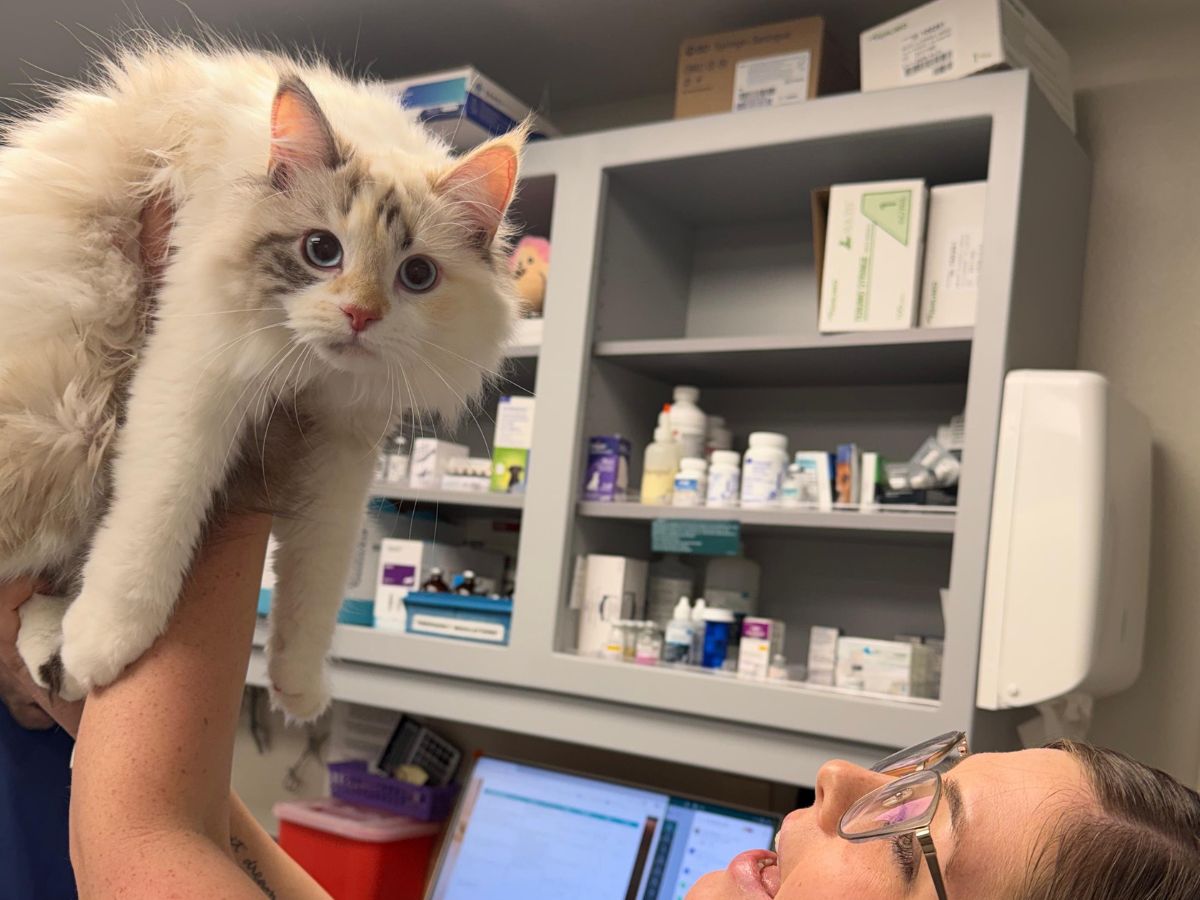
A person in scrubs holds up a fluffy white cat with blue eyes in front of shelves stocked with medication bottles.

Anesthesia & Surgery Consent Form

We understand that anesthesia can feel stressful for pet owners. Our team takes every precaution to ensure your pet’s safety, comfort, and well-being before, during, and after their procedure. This form explains what to expect and allows you to select your preferences so you can feel confident in your pet’s care.

*This may not include the pre-ops or additional treatments included on your estimate; instead, this is only intended to list the name/type of the procedure

In the event of updates, an emergency, and/or prior to additional procedures, you will be contacted by telephone. The phone number(s) where you can be reached today:

Surgical/Anesthesia Information:

As a full-service veterinary hospital, we are pleased and proud to offer you the best medical care available to your pet. Your pet's health is of utmost priority to our dedicated staff, and we take all possible precautions to ensure their safety and comfort. Although rare, unexpected complications with general anesthesia can occur.

  1. Bloodwork & ECG: All pets undergoing anesthesia at ABC Veterinary Hospital Pacific Beach have pre-anesthetic blood testing performed to look at basic organ function and to tailor anesthetic medications used. This will also check for pre-existing medical conditions, which may increase the risk of complications during surgery. Additionally, an electrocardiogram will be performed to determine the health of your pet's heart.
  2. Pre-Operative X-Rays: All pets undergoing anesthesia at ABC Veterinary Hospital Pacific Beach, who are 8 years or older are required to have pre-operative chest X-rays to evaluate heart size, shape, and lungs. If any patient has a heart murmur noted in their medical history, this is not optional unless discussed with a veterinarian beforehand.
  3. IV Catheter: Your pet will have a portion of their leg(s) shaved to allow an intravenous (IV) catheter to be placed. This provides immediate access to your pet's circulatory system for rapid administration of drugs should an emergency situation arise. Your pet may also be administered intravenous fluids to help maintain normal blood pressure, protect vital organs, and maintain proper hydration.
  4. Pain Control: All pets undergoing surgery will receive pain injections while at the clinic (which was in the initial quote). Postoperative pain management is a concern for all surgical procedures. Most procedures merit at-home oral medication for several days after surgery and will be dispensed at the veterinarian's discretion.
  5. Flea Treatment: For the health and safety of all of our hospitalized pets, all pets housed at our facility must be free of fleas. If fleas or evidence of fleas are found on your pet, an oral rapid-acting flea treatment will be administered (Capstar) at the owner's cost ($17)


Surgical/Anesthetic Consent Waiver:


Surgical Tattoo:

At ABC Veterinary Hospital Pacific Beach, we like to do what we can to prevent unnecessary anesthesia/risk. A surgical tattoo is a small colored line/dot that will be placed on your pet's inguinal area to reflect that he/she has been spayed/neutered. In the case your pet were to escape or become lost, one of the first things a shelter (or vet hospital) would do is search for that tattoo to determine if your pet has been spayed/neutered. We do this at the time of the surgery, and provide a local block so your pet doesn't feel a thing. Please select your wishes below if you would like your pet to receive a tattoo.


Cardiopulmonary Resuscitation (CPR) Directive

I understand ABC Veterinary Hospital Pacific Beach requires a CPR status when my pet is left in their care. I acknowledge that the attending veterinarian or staff members of ABC PB will make every effort to contact me regarding treatment in the case of this unforeseen event. The initial cost of CPR, oxygen, and emergency injections starts at approximately $800.

  • CPR means “Cardio Pulmonary Resuscitation” and is the treatment (resuscitation) of a pet who has stopped breathing or whose heart has stopped beating. Resuscitation of a pet who has stopped breathing but still has a heartbeat is more likely to succeed than resuscitation of a pet with no heartbeat.
  • DNR means “Do Not Resuscitate.” This means that if a pet stops breathing or his/her heart stops, no effort will be made to attempt to revive the pet, and the pet will die.
Clear Signature